Local guidesSouth Orange CountyLaguna Beach
Laguna Beach
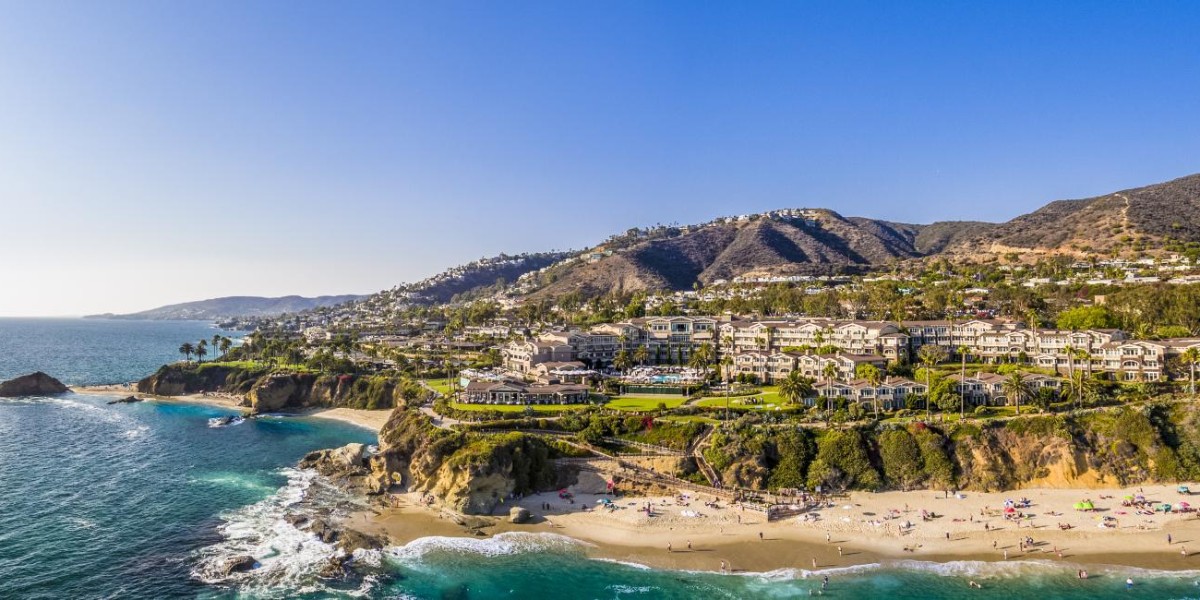
Laguna Beach is a coastal city in Orange County, California, known for its art festivals, coves and canyons, and the greenbelt of hills that keeps it set apart.
Where is Laguna Beach, and what is it like?
Laguna Beach is a seaside city on the Pacific coast of Orange County, and it is part of the Los Angeles metropolitan area. The 2020 census counted 23,032 people. The city has 9.8 square miles in total, 8.8 of them land, and a coastline about 7 miles long with 27 beaches and coves.
Its neighbors are the Pacific Ocean to the southwest, Crystal Cove State Park to the northwest, Laguna Woods to the northeast, Aliso Viejo and Laguna Niguel to the east, and Dana Point to the southeast. The unincorporated community of Emerald Bay sits between the northernmost stretch of coast, Irvine Cove, and the rest of the city.
The place has stayed apart from the sprawl around it. The hills, the limited highway access and a dedicated greenbelt are the reasons for that. The climate is mild. Average daily highs run from 68 degrees in January to 80 in August, and annual rainfall is 13.56 inches.
Who lived here before the town, and who settled it?
People were here a very long time ago. In 1933 construction on St. Ann's Drive turned up the first fossilized paleoindian skull found in California, called Laguna Woman. It was first dated to more than 17,000 years before the present, though revised measurements point to about 11,700 years ago. The Tongva were the Indigenous people of the area, and Aliso Creek marked the boundary between them and the Acjachemen. Laguna Canyon appears on an 1841 Mexican land grant map as Cañada de las Lagunas, the Glen of the Lagoons.
Rancho San Joaquin, which took in north Laguna Beach, was granted to José Antonio Andres Sepúlveda before the Mexican American War. After a drought in 1864 he sold it to James Irvine. Most of what is now Laguna Beach was a rarity. It was one of the few parcels of coastal land in Southern California that no Mexican land grant ever covered.
How did Laguna Beach grow into an art colony?
Settlers came after the Civil War, drawn by the Homestead Act and the Timber Culture Act, which gave up to 160 acres to anyone who planted at least 40 acres of trees. In Laguna Beach they planted eucalyptus. The George and Sarah Thurston family of Utah took the first permanent homestead in 1871, on 152 acres in Aliso Creek Canyon. In 1876 the brothers William and Lorenzo Nathan Brooks bought land in Bluebird Canyon, subdivided it and started the small community of Arch Beach. A 1921 county history called Nate Brooks the Father of Laguna Beach.
The post office opened in 1887 under the name Lagona. The postmaster in 1904, Nicholas Isch, got the name corrected to Laguna Beach. By then the town was already a getaway. Hubbard Goff built a big hotel at Arch Beach in 1886, and visitors from nearby cities pitched tents on the beaches each summer.
Early in the 1900s the isolated coast and hills pulled in plein air painters. William Wendt, Frank Cuprien and Edgar Payne were among them, and they formed the Laguna Beach Art Association. The first art gallery opened in 1918 and later became the Laguna Beach Art Museum.
How did Laguna Beach become a city?
Filmmakers followed the painters. Starting in 1913, dozens of silent films were shot at the local coves, with stars such as Harold Lloyd, Mary Pickford and Douglas Fairbanks Jr. Crews stayed during long shoots at the Arch Beach Tavern, on the hillside above Moss Street.
In 1920 only about 300 people lived in town, but a large share of them worked in creative fields. Laguna Canyon Road was the only way in until 1926, when the Pacific Coast Highway was completed. A population boom was expected. Residents who called themselves Lagunatics pushed for incorporation to protect the small-town feel, and the city incorporated on June 29, 1927. It had 1,900 residents then and more than 10,000 by 1962, and its area grew to four times what it had been. A council and manager government has run the city since 1944.
Laguna also attracted unusual people. The adventurer Richard Halliburton built his Hangover House on the slopes of South Laguna.
What changed in the later 1900s?
In the late 1960s and early 1970s Laguna Beach was the Southern California center of hippie culture. In early 1967 John Griggs and other founders of the Brotherhood of Eternal Love moved from Modjeska Canyon to the Woodland Drive neighborhood, which they renamed Dodge City. Timothy Leary lived in a beach house on Gaviota Drive. The Utsava Rajneesh Meditation Center on Laguna Canyon Road was the last commune in the United States for followers of the guru Osho.
The city has had a sizable LGBTQ population since the 20th century. In 1982 the election of Robert F. Gentry made him the first openly gay elected official in southern California and the first openly gay mayor in the state.
Then came fire. In October 1993 a blaze destroyed or damaged 441 homes and burned more than 14,000 acres. The National Fire Protection Association ranks it the seventh largest loss wildland fire in the United States. A wildlife corridor is being created between Laguna Beach and the Cleveland National Forest, so animals can get out next time.
How is Laguna Beach laid out?
The town is linear. It stretches along Pacific Coast Highway, which locals call Coast Highway or PCH, and several canyons break it up. Broadway, which becomes Laguna Canyon Road (State Route 133) outside town, splits the highway into North Coast Highway and South Coast Highway. House numbers climb outward from Broadway.
North Laguna runs from about High Street to the Crystal Cove State Park line, and it is mostly residential, with large gated communities and entry points to secluded beaches. Main Beach and the Village fan out from Broadway. Gallery Row and oceanfront Heisler Park are to the north, and the shops and restaurants of the village are to the south. Broadway ends at Main Beach, with its boardwalk.
South of Main Beach is a long stretch from about Cleo Street to Aliso Creek Beach, with shopping, hotels and more beach access. South Laguna runs from Aliso Creek Beach to Crown Valley Parkway and has cliffside beaches and a hospital. The town's highest point is Temple Hill in the Top of the World neighborhood, at 1,007 feet.
What are the big events in Laguna Beach?
Tourism is the main industry, and an estimated six million people visit each year. The summer art season drives much of it. The Pageant of the Masters recreates famous artworks with real people as models and is held in the 2,600 seat Irvine Bowl. A visitor guide warns that tickets sell out early and that traffic on State Route 133 gets heavy on pageant nights. The Festival of Arts shows juried work by 140 Orange County artists and was renovated in 2017.
The Sawdust Art Festival began in 1965 as a counterculture alternative, with non-juried work on a 3 acre site. Art-A-Fair began in 1966 and shows juried work by 125 artists from outside the area. The Laguna Playhouse, founded in 1920, is billed as the oldest continuously running theatre on the west coast.
The Laguna Art Museum sits beside the main beach and focuses on California art. October brings the Laguna Beach Plein Air Painting Invitational. Other regular events include the Bluewater Music Festival and Kelpfest, held on Earth Day.
What is the outdoor life like?
Surfing here centers on a five block stretch of rocky reefs between Brooks and St. Ann's streets. The Brooks Street Surfing Classic began in 1955 and has been held 52 times from 1955 to 2015, only when peak swell arrives in a four month summer window, and only residents may enter. The Vic Skimboarding World Championship has run at Aliso Beach since 1976. The Laguna Open Volleyball Tournament started in 1955 and claims to be the second oldest in the country.
A visitor guide cautions that the shore break can cause serious neck and back injuries, so check with the lifeguards. Divers go to Diver's Cove in North Laguna, and the tide pools at Moss Street are good for children. The foothill trails are known internationally for mountain biking, and Hans Rey, a mountain bike hall of fame member, lives in town. Heisler Park also hosts the U.S. Open for Lawnbowling.
Why is so much of the land around Laguna Beach protected?
Laguna Beach is the only Orange County city protected by a dedicated greenbelt inland and a bluebelt out to sea. Conservationists founded Laguna Greenbelt in 1968 to save the horseshoe of hills and canyons around town. As of 2011, more than 20,000 acres of connected wildland made up Laguna Coast Wilderness Park, the Jim Dilley Preserve, Crystal Cove State Park and Aliso and Wood Canyons Wilderness Park.
The wilderness park covers 7,000 acres and holds the only natural lakes in Orange County. It exists because artists, activists and politicians fought in the late 1980s and early 1990s to stop a 3,200 acre housing project in Laguna Canyon. Offshore, the Laguna Beach State Marine Reserve was set up in 2012 and makes most of the coast a no-take zone. Docents of the Laguna Ocean Foundation guide visitors at its tidepools. The city has also used goats for brush control since the early 1990s.
How do people get around, and what about schools?
Only two roads lead in or out. One is Coast Highway, connecting to Newport Beach and Dana Point. The other is State Route 133 through Laguna Canyon. OCTA runs two bus routes, and the city's own transit runs trolleys on five neighborhood routes, named for Arch Beach Heights, Bluebird Canyon, Top of the World, North Laguna and South Laguna. They are free. Parking downtown is tight in summer, and lots there charge from $7 to $15. John Wayne Airport is about 15 miles away.
The Laguna Beach Unified School District has one high school, Laguna Beach High School, one middle school, Thurston, and two elementary schools, El Morro and Top of the World. Laguna College of Art and Design in Laguna Canyon was founded in 1961 and had about 450 students in 2013. The nearest public college is Saddleback College in Mission Viejo. Providence Mission Hospital Laguna Beach is the city's health care facility.
Find a local business in Laguna Beach
Laguna Beach is covered by the South Orange County guide. Start with the businesses in Laguna Beach itself, or look across the whole guide by what they do.
Businesses in Laguna BeachQuestions about Laguna Beach
- What county is Laguna Beach in?
- Laguna Beach is in Orange County, California, on the Pacific coast.
- When did Laguna Beach become a city?
- It incorporated on June 29, 1927. The post office had opened in 1887.
- What is the Pageant of the Masters?
- It is a summer show where real people pose to recreate famous artworks on stage. It is held in the Irvine Bowl, which seats 2,600.
- How many beaches does Laguna Beach have?
- The coastline is about 7 miles long and includes 27 beaches and coves.
- Is public transit in Laguna Beach free?
- The city's trolleys are free, including the five neighborhood routes. OCTA buses are separate.