Local guidesSouth Orange CountyCapistrano Beach
Capistrano Beach
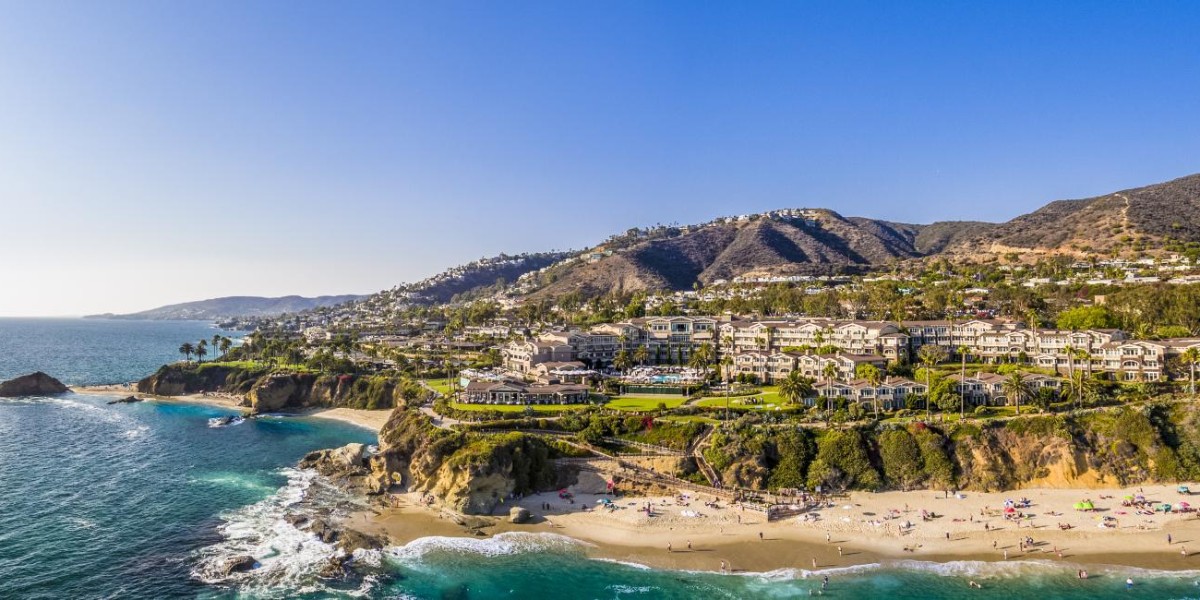
Capistrano Beach, also called Capo Beach, is a coastal neighborhood at the southern end of Dana Point, California, between San Clemente and Doheny State Beach.
Where is Capistrano Beach, and what is it like?
Capistrano Beach is a coastal neighborhood in the city of Dana Point, in Orange County. Locals call it Capo Beach. San Clemente is to the south and Doheny State Beach to the north. Some homes sit on a cliff above Coast Highway and Capistrano Beach Park. Several celebrities live in the area, notably on Beach Road, where Hobie Alter came up with the Hobie Cat catamaran.
How did Capistrano Beach begin?
The first land title here was Rancho Boca de la Playa, granted to Don Emigdio Vejar. Juan Abila bought it in 1860, and Marcus A Forster bought it in 1886. Forster sold a strip to the San Bernardino and San Diego Railway, which worked with the California Central Railway to build a line between Los Angeles and San Diego with a station at Capistrano. The station started out as San Juan by the Sea, then became Serra in 1910, after the newly formed school district.
Development began in 1925 with homes on the bluff, and the Capistrano Beach Club went up along the shore. In 1929 the Petroleum Securities Company, owned by Edward L. Doheny, took over the development. Digging that year turned up the bones of a mastodon, or possibly a mammoth, which went to the Los Angeles Natural History Hall. In 1931, after the death of Doheny's son, he gave more than 40 acres to the state for Doheny State Beach. Capistrano Beach became part of Dana Point in 1989.
How did the Doheny family shape Capistrano Beach?
In 1928 a corporate entity of Edward Doheny, who had built his fortune in oil in Southern California and Mexico, bought a number of lots here. His son, Ned, formed the Capistrano Beach Company with his wife's twin brothers, Clark and Warren Smith, and a contractor named Luther Eldridge. The plan was a community of Spanish style houses. Eldridge liked two things, a typical Spanish roofline and big ceiling beams in the main rooms. The roofs were red tile with a low-pitched gable that spread into one short side and one long side, and the beams were decorated with stenciled artwork by the artist Alex Meston.
Eldridge finished the original Doheny family house on the bluffs, four houses on the beach and 18 other homes scattered around the area before the project came to a halt. The unimproved lots went back to Edward Doheny and, after his death in 1935, to his wife and heirs. By 1944 all of the properties had been sold to private owners. The Doheny family also paid for what was then called St. Edward's Chapel in Capistrano Beach. It grew into a parish and moved to its present bluff-top site in Dana Point, overlooking Doheny State Beach.
What happened to the Capistrano Beach pier?
A wooden pier, 1,180 feet long, was a popular spot for strolling, sightseeing and fishing. Waves badly damaged it in 1964. It was condemned and torn down in 1965. The Capistrano Beach Club declined as well and was dismantled in the late 1960s.
The shoreline still takes a beating. In storms in 2018 a boardwalk collapsed, and erosion undermined an outdoor basketball court. The storm also uncovered old cars that had been placed decades earlier as part of a sea wall, now corroded. More boulders went in to protect the court. A proposed project, Serra Siding, would add 1.2 miles of siding track along the shore to give this busy rail corridor more capacity.
What is Doheny State Beach?
Doheny State Beach, nicknamed Doho, is the first state beach in the California state park system. It is in the city of Dana Point, just north of Capistrano Beach, at the mouth of San Juan Creek. The creek runs from the Santa Ana Mountains to the sea, where it forms a fresh-water lagoon. The beach is named for Edward L. Doheny, who in 1893 borrowed money, dug the first oil well in what is now Dana Point and struck oil 200 feet down. It became Doheny State Beach on July 1, 1963. The original gift was 41 acres, and 21 more came later from the Santa Fe Railroad, the University of California Regents and the Union Oil Company.
In the late 1930s the Civilian Conservation Corps built campgrounds, picnic areas and custodian lodges there under the New Deal, and most of those structures are gone now. Today the beach covers 62 acres, with a day-use surfing beach at the north end and campgrounds in the south. It is one of California's most popular camping spots and draws more than 850,000 people a year. There are tide pools, and a visitor center with several aquariums. State parks also run year-round programs on marine life, bird life, water quality, insects and Native American studies.
The surf at Doheny is known as a beginner level break with consistent waves and long rides, which on good days can run 300 meters. It has four takeoff spots named Boneyard, Doheny Rivermouth, Second Spot and The Hammer. The water holds abalone, sea anemones, sea bass, crabs, common dolphins, harbor seals, octopus and stingrays, and the shore birds include brown pelicans, great blue herons and snowy egrets. The beach turns up in surf rock, too. The Beach Boys mention it in Surfin' Safari and Surfin' U.S.A., and in Surfer Joe by the Surfaris it is the hangout of the title character.
How is the shoreline holding up?
Wave damage has been a theme here since the pier came down. In June 2023 California State Parks, Orange County and the city of Dana Point announced a sand replenishment project meant to offset coastal erosion. The plan was to place 45,000 cubic yards of sand on Doheny State Beach and Capistrano Beach Park, covering about 1,775 feet of shoreline. The sand came from the Santa Ana River and was screened to match the sand on local beaches. Officials called it a temporary fix while they look for a longer term answer, and they hoped nesting birds that like sandy beaches would return.
In October 2022 the California Coastal Commission approved the Doheny Desalination Plant. It will draw water from offshore of the state beach and is able to produce 5 to 15 million gallons of fresh water a day.
Why does Capistrano Beach belong in surf history?
Richard Henry Dana, who wrote Two Years Before the Mast, thought the high bluffs and sheltered coves of this stretch of coast were the most beautiful spot in California, and early surfers agreed. Dana Point became home to many of the first companies that made surf products, and magazines such as Surfer and The Surfer's Journal were started and headquartered there. Bruce Brown made the surf film The Endless Summer in Dana Point.
Hobie Alter opened a surf shop in Dana Point in 1954. He had started building balsa surfboards for friends in 1950, and in 1958 he and Gordon Clark began experimenting with foam and fiberglass boards, which were lighter and faster than wooden ones. Alter's Hobie Cat catamaran, conceived on Beach Road in Capistrano Beach, grew into a worldwide business, and he sold it to the Coleman Company in 1976. In 2018 Dana Point honored him with a 27-foot bronze statue, Hobie Riding the Wave of Success, the first feature of the city's Watermen's Plaza.
A famous wave went away, too. Killer Dana broke off the Dana Point headland, coming out of deep water and breaking close to the rocks. It was destroyed in 1966 by the breakwater built for Dana Point Harbor, and the surf group The Chantays recorded an instrumental named for it.
How does Capistrano Beach fit into Dana Point?
Capistrano Beach has been part of the city of Dana Point since 1989. Dana Point had 33,107 residents at the 2020 census. The city is named for its headland, which Richard Henry Dana Jr. described in his 1840 memoir. He called the area, along with neighboring San Juan Capistrano, the only romantic spot on the coast, and it is designated California Historical Landmark #189. The city lies 59 miles southeast of Los Angeles and 65 miles northwest of San Diego, and State Route 1 gives it ready access to the coast.
The Acjachemen lived here first. The village of Toovannga stood near what is now Dana Point Harbor, close to the mouth of San Juan Creek. Later the cove was a popular port for ships in the hide trade with Mission San Juan Capistrano, and trading peaked in the 1830s and 1840s. The harbor was built in the 1960s and dedicated on July 31, 1971. It has a marina and is a departure point for the Catalina Express to Avalon.
Dana Point holds a Festival of Whales over two weekends in March and a Tall Ships Festival in September. The climate is mild, with an August average high of 79 degrees and a December average high of 65, and frost is extremely rare. About 12 inches of rain falls in a year, almost all of it between November and March.
What schools and services cover Capistrano Beach?
Capistrano Unified School District serves all of Dana Point. It formed in 1965, covers 195 square miles, and is the largest school district in Orange County. Dana Hills High School, one of the oldest high schools in the area, opened in 1972. Fire protection comes from the Orange County Fire Authority and law enforcement from the Orange County Sheriff's Department. Year-round marine safety services on the county beaches come from OC Lifeguards, and California state lifeguards cover the state beaches.
Find a local business in Capistrano Beach
Capistrano Beach is covered by the South Orange County guide. Start with the businesses in Capistrano Beach itself, or look across the whole guide by what they do.
Businesses in Capistrano BeachQuestions about Capistrano Beach
- Is Capistrano Beach part of Dana Point?
- Yes. It became part of the city of Dana Point in 1989.
- What is Capo Beach?
- Capo Beach is another name for Capistrano Beach.
- What was invented on Beach Road in Capistrano Beach?
- Hobie Alter came up with the Hobie Cat catamaran there.
- Is Doheny State Beach in Capistrano Beach?
- Doheny State Beach is just north of the neighborhood, in the city of Dana Point. It is the first state beach in the California state park system.
- How many people visit Doheny State Beach?
- It draws more than 850,000 people a year, and its campgrounds are among the most popular in California.
- Who was Edward Doheny?
- He was an oil industrialist. His family company developed Capistrano Beach starting in 1928, and Doheny State Beach is named for him.