Local guidesSouth Orange CountyAliso Viejo
Aliso Viejo
Aliso Viejo is a planned city in the San Joaquin Hills of southern Orange County, California, incorporated in 2001.
Where is Aliso Viejo, and what is it like?
Aliso Viejo is a city in the San Joaquin Hills of southern Orange County. The name is Spanish for old alder tree. It had 52,176 residents at the 2020 census, up from 47,823 in 2010, and covers 7.5 square miles, all land. Laguna Beach is on the west and southwest, Laguna Hills on the east, Laguna Niguel on the southeast and Laguna Woods on the north. The similar name Mission Viejo belongs to a different nearby city.
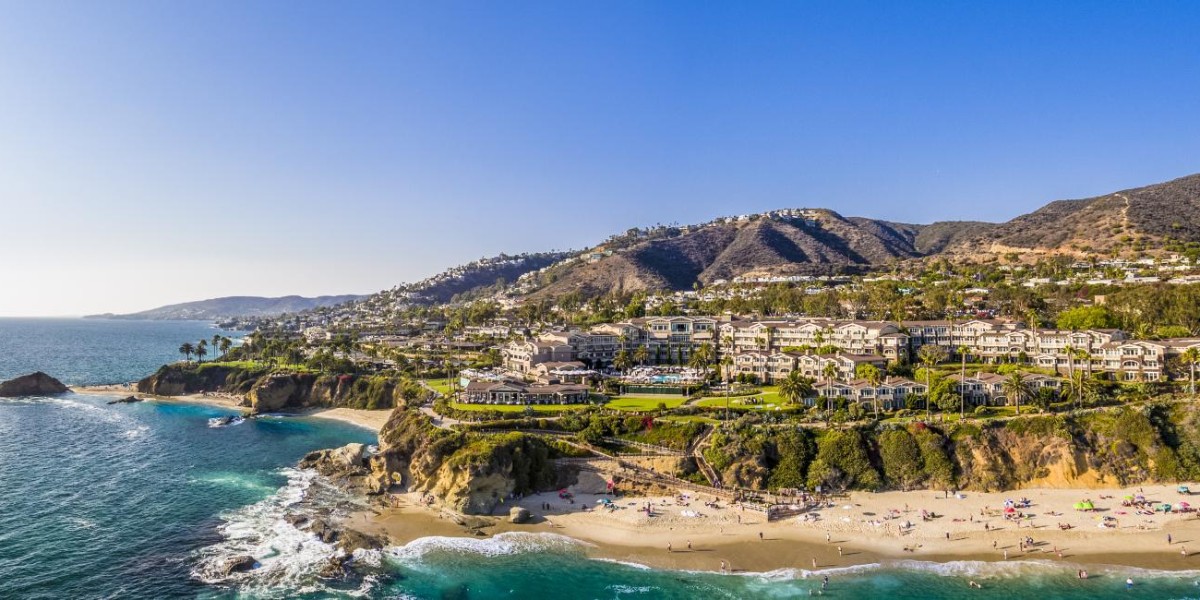
Much of the city sits on the east slope of the San Joaquin Hills, a coastal range about 15 miles long. Aliso Creek forms part of the boundary with Laguna Niguel, and Wood Canyon Creek forms part of the western edge. Aliso Viejo is one of several cities that border Aliso and Wood Canyons Regional Park.
It is a young, family-heavy place. The median age in 2020 was 38.8 years, and 35.3 percent of households had children under 18. The median household income was $137,970 in 2023.
How did Aliso Viejo begin?
The Acjachemen are the Indigenous people of the area and lived here for thousands of years. They had numerous villages along Aliso Creek, which also divided them from the Tongva. Those village sites later became the southern part of the Moulton Ranch.
The original 6,600 acres of the planned community were part of the 26,000 acre Moulton Ranch. The Moulton family took title in the 1890s to Rancho Niguel, which Mexico had granted to Juan Avila in 1842. Over the years pieces of the ranch were sold and became Leisure World, Laguna Hills and Laguna Niguel.
The Mission Viejo Company bought the remaining 6,600 acres in 1976 to build a new planned community. The master plan called for 20,000 homes and a population of 50,000. Orange County approved it in 1979, homes went on sale in March 1982, and the first family moved in that November. As part of the deal, 2,600 acres went to the county for Aliso and Wood Canyons Wilderness Park, and 800 acres were set aside for parks, schools and community facilities.
How was Aliso Viejo planned?
The plan tried to match jobs to residents. Aliso Viejo was the first planned community in California to balance its projected workforce against the jobs within its borders. Pacific Park, a central 900 acre business park and town center, was expected to supply more than 22,000 jobs. Every home was to be within 1 and a half miles of it.
The Aliso Viejo Community Association was set up to manage the local parks and open space. It was the first community-wide association of its kind in California, and it can provide a full range of community services and facilities.
How did Aliso Viejo become a city?
Aliso Viejo had been an unincorporated community since 1979. The Aliso Viejo Cityhood 2000 Committee put an incorporation measure on the ballot for a 2001 special election, and voters approved it with 93.3 percent in favor. The city became official on July 1, 2001, making it Orange County's 34th city and the only one incorporated since 2000. Carmen Vali-Cave, co-founder and president of the committee, became the first mayor.
It is a general law city with a council and manager system. A volunteer council of five members serves staggered four year terms and picks a mayor and mayor pro tem each year. The city seal, adopted in 2001, shows mountains, a sunset, a tree and buildings, along with the words July 2001.
Who lives in Aliso Viejo?
The 2020 census counted 19,565 households, 52.5% of them married couples and 22.8% one-person households. Residents under 18 were 22.2% of the population, and those 65 or older were 10.5%. There were 20,189 housing units, of which 3.1% were vacant. Ten years earlier the city had 47,823 residents in 18,204 households, the median age was 35.1, and 39.0% of the households had children under 18.
What businesses and employers are in Aliso Viejo?
The city's economy leans toward technology, health care and manufacturing. Companies listed there include Pacific Life, Quest Software, Smith Micro Software, Microsemi Corporation and Sony Interactive Entertainment. Ambry Genetics, a health care genetic lab, is a subsidiary of Konica Minolta, and Vertos Medical makes instruments for minimally invasive procedures. Metagenics is a medical manufacturing company.
Some well known names moved on. Fluor was headquartered in Aliso Viejo until it relocated to Irving, Texas in March 2006, though some divisions remain. Tamiya America, the U.S. subsidiary of the model car maker, moved to Irvine.
What is there to see and do?
Soka University of America was dedicated on May 3, 2001, on a 103 acre campus with 18 buildings. The land and construction cost $250 million. The Soka Performing Arts Center, a 1,000 seat concert hall, opened in September 2011, and its acoustics were designed by Yasuhisa Toyota, who also worked on Walt Disney Concert Hall.
The Aliso Viejo Golf Course was designed by Nicklaus Design in 1999 and became the Aliso Viejo Country Club after a redesign in 2005. The Aliso Viejo Library, a branch of the Orange County Public Library system, opened on January 31, 1998 and closed for tenant improvements on April 15, 2024. Hoag Urgent Care Aliso Viejo and Aliso Ridge Behavioral Health provide health care.
What is Aliso and Wood Canyons Wilderness Park?
Aliso and Wood Canyons Wilderness Park is a 4,500 acre county park in the San Joaquin Hills. It borders Aliso Viejo, Dana Point, Laguna Beach, Laguna Hills and Laguna Niguel, and it is part of the 22,000 acre South Coast Wilderness. OC Parks runs it. Aliso Creek cuts Aliso Canyon through the hills on its way from the Cleveland National Forest to the Pacific, and Wood Canyon Creek flows south to join it in the middle of the park. Elevations run from 14 feet above sea level to 1,036 feet at Temple Hill in Laguna Beach, known as Top of the World, where most of Orange County can be seen on a clear day.
People wintered here for a very long time. Aliso Canyon had streams and springs that ran all year, and it gave easy access between the inland areas and the ocean. Aliso Creek was the line between Acjachemen land to the south and Tongva land to the north, and the Acjachemen village of Niguili stood in what is now the park, near where Aliso Creek meets Sulphur Creek. Mexico granted the 13,316 acre Rancho Niguel, which covered most of the park, to Juan Avila in 1842. Avila sold it in 1865 after a severe drought, and in 1895 Lewis Moulton and Jean Pierre Daguerre acquired it.
The canyon was spared when the county bought about 40 parcels for a park. It officially opened on March 31, 1990, as Aliso and Wood Canyons Regional Park, and it was later redesignated a Wilderness Park to better protect native habitat. About 30 miles of trails wind through it. The paved Aliso Creek Trail runs its length, and the unpaved Wood Canyon Trail ends at Canyon View Park in Aliso Viejo. Wood Canyon is shaded and enclosed, and it is popular for horseback riding, while the hills around it hold mountain biking paths from beginner to advanced.
The canyon began forming about 1.2 million years ago, as Aliso Creek cut through hills that were rising at the same time. Limestone outcrops in the northeast part of the park, called the Pecten Reef, have given up thousands of fossils, including Miocene dolphins and whales. The park shelters 137 species of nesting and migratory birds, and it is one of the largest sanctuaries in coastal Orange County for coyotes and bobcats. In 2021 the Old Growth Forest Network designated the park for its old live oak and sycamore trees.
What is Soka University like?
Soka University of America is a private liberal arts college. Daisaku Ikeda, founder of the Soka Gakkai International Buddhist movement, started it in 1987 as a small graduate school on a ranch in Calabasas. The institution bought 103 acres in Aliso Viejo in 1995, and the new campus opened to 120 first-year undergraduates on 24 August 2001. Since August 2007 the Aliso Viejo campus has housed all of its graduate, undergraduate and research programs. The college is secular, and students are not required to join the Buddhist faith.
The buildings were designed to look like an Italian hillside village in Tuscany, with red-tiled roofs, stonework and earth colors. Three academic buildings carry the names of Ikeda and his wife Kaneko, of the peace activists Linus and Eva Helen Pauling, and of Mohandas and Kasturba Gandhi. A building dedicated in 2012 is named for the Nobel Peace laureate Wangari Maathai.
Undergraduates earn a Bachelor of Liberal Arts and choose one of five concentrations: Environmental Studies, Humanities, International Studies, Life Sciences, or Social and Behavioral Sciences. There are no departments organized by discipline. The graduate school offers a master's degree in Educational Leadership and Societal Change. Every undergraduate must study a language other than their own, Spanish, French, Mandarin Chinese or Japanese, for two years, and then spend one semester abroad in a country where it is spoken. About 60% of students come from the United States and 40% from 30 other countries on six continents.
How do the San Joaquin Hills shape Aliso Viejo?
The San Joaquin Hills are a low range of the Peninsular Ranges, running from Newport Beach to San Juan Capistrano. The main ridge peaks at about 1,000 feet near Laguna Beach, and in many places the hills drop straight into the Pacific as sea cliffs. Aliso Viejo is one of nine cities that border the range, and Aliso Canyon, cut by Aliso Creek, is by far the largest canyon through it.
What schools serve Aliso Viejo?
Public schools are mostly part of the Capistrano Unified School District. Elementary schools include Canyon Vista, Don Juan Avila, Oak Grove and Wood Canyon. Aliso Viejo Middle School and Don Juan Avila Middle School serve the middle grades, and Aliso Niguel High School is the high school. A tiny part of the city, the Bells Vireo neighborhood off El Toro Road, is contracted to the Laguna Beach Unified School District, though students there may choose Capistrano schools.
Private options include VanDamme Academy, St. Mary and All Angels School and Aliso Viejo Christian School. For college, Soka University of America is in town. Saddleback College, Irvine Valley College and Orange Coast College are all nearby.
Local bus service is run by the Orange County Transportation Authority. Fire protection comes from the Orange County Fire Authority, and the Orange County Sheriff's Department handles law enforcement.
Capistrano Unified formed in 1965, covers 195 square miles, and is the largest school district in Orange County. All four of the district's Aliso Viejo elementary schools, Canyon Vista, Don Juan Avila, Oak Grove and Wood Canyon, are California Distinguished Schools, and so are Aliso Viejo Middle School and Don Juan Avila Middle School. Aliso Niguel High School is a National Blue Ribbon School.
Find a local business in Aliso Viejo
Aliso Viejo is covered by the South Orange County guide. Start with the businesses in Aliso Viejo itself, or look across the whole guide by what they do.
Businesses in Aliso ViejoQuestions about Aliso Viejo
- When did Aliso Viejo become a city?
- Aliso Viejo incorporated on July 1, 2001. It is Orange County's 34th city.
- What does Aliso Viejo mean?
- It is Spanish for old alder tree.
- How many people live in Aliso Viejo?
- The 2020 census counted 52,176 residents.
- Who built Aliso Viejo?
- The Mission Viejo Company bought the land in 1976 and built it as a planned community on former Moulton Ranch land.
- What is Aliso and Wood Canyons Wilderness Park?
- It is a 4,500 acre county park in the San Joaquin Hills with about 30 miles of trails. It borders Aliso Viejo and four other cities.
- Is Soka University in Aliso Viejo?
- Yes. Soka University of America has had its campus on 103 acres in Aliso Viejo since 2001, and all of its programs have been there since August 2007.