Local guidesTemecula ValleyWildomar
Wildomar
Wildomar is a city in southwestern Riverside County, California, incorporated on July 1, 2008, with 36,875 residents at the 2020 census.
Where is Wildomar, and what is it like?
Wildomar is in southwestern Riverside County. It covers 23.7 square miles (61 km2), all of it land, and Interstate 15 cuts the city in two. The population was 32,176 at the 2010 census and 36,875 at the 2020 census, and it has more than doubled since 2000, when Wildomar was still an unincorporated census-designated place. The median age in 2020 was 37.1, and 40.2% of households included children under 18.
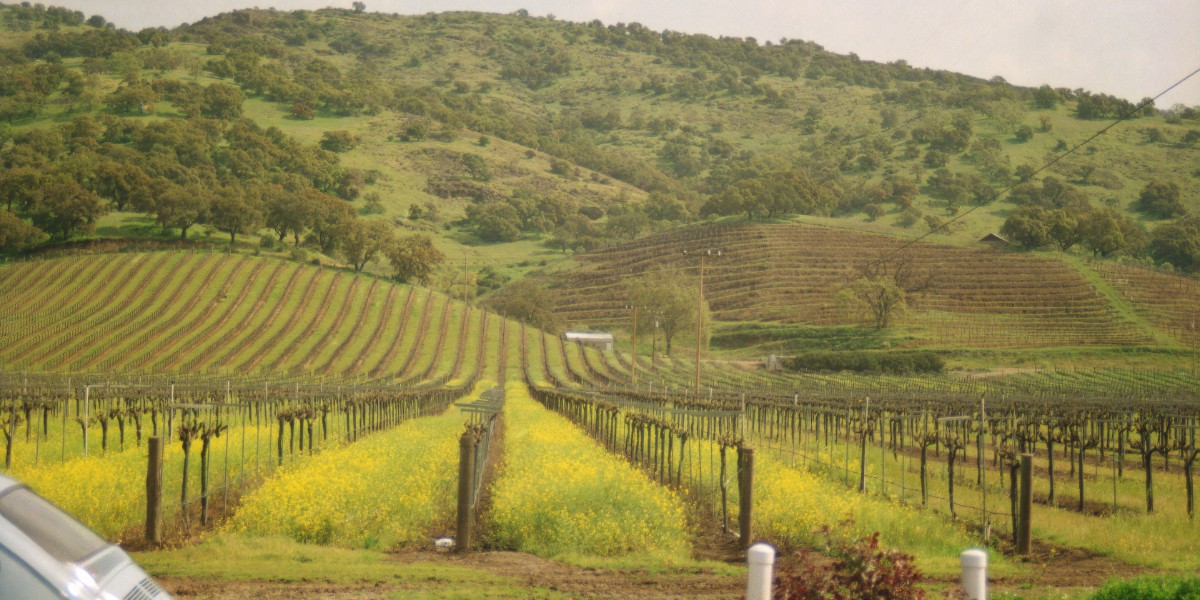
The hills are covered in coastal sage scrub and chaparral, with California poppies in season. California sycamores grow along the riverbeds and shade ferns and mosses. Iodine Springs Reserve is a protected area managed by the Riverside County Regional Park and Open Space District.
In 2010 the census counted 9,992 households in Wildomar, and the median age was 34.6. The Census Bureau estimated the 2023 median household income at $95,677, with a per capita income of $34,555. In 2020, 72.8% of occupied homes were owner-occupied.
How did Wildomar begin?
It started with a railroad and a lake. In the summer of 1880, Franklin Heald of Pasadena looked down from Mt. Baldy and first noticed Lake Elsinore, then called La Laguna. That October, Frank Kimbal of San Diego signed an agreement with the Atchison, Topeka and Santa Fe Railroad to build a line past the lake. The route became the California Southern Railroad, with rails and spikes shipped from Antwerp, Belgium, and locomotives from the East Coast. The line reached Colton on August 14, 1882.
Heald found he could buy Rancho La Laguna, except for some 500 acres owned by the Machado family, from the London and San Francisco Bank for $24,000. On September 24, 1883, he and partners William Collier and Donald Graham bought 12,832 acres of it. A boxcar known as Car B served as the depot near what is now Clinton Keith Road starting January 1, 1884. Heavy rain that winter, as much as 60 inches (1,500 mm), washed out the tracks and broke the California Southern financially. The Santa Fe took it over and rebuilt it by the beginning of 1885.
What was Rancho La Laguna?
Rancho La Laguna was a 13,339-acre Mexican land grant, given in 1844 by Governor Manuel Micheltorena to Julian Manriquez. Its lands now lie in the cities of Lake Elsinore and Wildomar. Manriquez had his adobe ranch house at the north end of the west side of the lake, and he sold the land to Abel Stearns in 1851. The 1848 Treaty of Guadalupe Hidalgo said land grants would be honored, so a claim was filed in 1852 and the grant was patented to Stearns in 1872. Stearns sold the rancho to Augustin Machado in 1858.
From 1857 to 1861 the rancho was a stop on the Butterfield Overland Mail between Los Angeles and Fort Yuma, and the old Manriquez adobe served as the stage station. In 1862, during the Civil War, the Union Army set up Camp Laguna Grande there to graze its horses. Machado died in 1865 and his eldest son, Juan Bautista Machado, inherited the property. In 1873 all but 500 acres went to Charles A. Sumner, an English settler. Juan kept the 500 acres at the west corner of the lake, and in 1883 Heald, Graham and Collier bought the rest from Sumner. The community they developed was incorporated as the city of Elsinore in 1888.
What is Lake Elsinore, the lake beside Wildomar?
Lake Elsinore is a natural freshwater lake east of the Santa Ana Mountains, fed by the San Jacinto River. It is the largest natural freshwater lake in Southern California. Spanish explorers called it Laguna Grande, and it was renamed for the town of Elsinore, established on its northeastern shore on April 9, 1888. The Spanish Franciscan padre Juan Santiago saw it in 1797 while exploring east from Mission San Juan Capistrano. Later, Mexican rancheros, trappers, the Frémont expedition and Gold Rush immigrants camped and watered their animals along its southern shore, on what became the Southern Emigrant Trail and the route of the Butterfield Overland Mail.
The lake sits in the Elsinore Valley, a rift valley that is part of the Elsinore Trough, and it is the largest sag pond in the Elsinore Fault Zone. Its level has swung hard. It was very high after the Great Flood of 1862 and overflowed in 1872. The rains of the winter of 1883 and 1884 filled it to overflowing in three weeks. It went dry in the mid-1930s and was refilled by 1938, then ran dry for most of the 1950s and was refilled in the early 1960s. More than a week of heavy rain in 1980 flooded it and destroyed surrounding homes and businesses.
Since then a multimillion-dollar project has held the water at a steadier level, which allowed homes to be built close to the shore, and an aeration system added in 2007 helps prevent fish kills. In February 2024 a series of storms brought the lake to 1,248 ft, a 25 year high. In the 1920s the lake hosted teams for Olympic training and high-speed boat racing. It was also home to the Lake Shore Beach Club, an African American resort.
How did Wildomar get its name?
Collier and Graham mapped the Wildomar townsite in December 1885 and recorded it with San Diego County on November 20, 1886. The name is a blend of three first names. Wil is for William Collier, do for Donald Graham, and mar for Margaret Collier Graham, Donald's wife and William's sister.
Growth came fast. In 1886 the town got a new school, a post office and a railroad depot. By 1887 it could claim a large hotel, a livery stable, a blacksmith shop, a lumber yard, numerous stores and a park. A Methodist-Episcopalian church went up in 1888. In October 1887 the founders mapped a Santa Rosa addition of about 1,500 acres, bought from Parker Dear, who had been trying to develop a town called Linda Rosa farther south on the rail line. By the start of the 20th century Wildomar even had a newspaper, The Transcript.
How did Wildomar become a city?
Washouts kept hitting the railroad. Within a few years the rail connection south from Temecula to San Diego was abandoned, and development slowed. In 1935 rail service to Wildomar ended and the rails were pulled up back to Pinacate. The town was almost forgotten. The completion of the Temecula Valley Freeway (I-15) in the early 1980s brought a new wave of interest, and growth returned. The city was also an important place for honey production.
Residents of Wildomar and Sedco Hills voted to incorporate on February 5, 2008. Wildomar became the 25th city in Riverside County on July 1, 2008. After the city took over the local cemetery district in November 2011, it began managing the cemetery directly.
Schools, services and getting around in Wildomar
The Lake Elsinore Unified School District covers most of the city, and a portion is in the Menifee Union School District and the Perris Union High School District. Local schools include Donald Graham, Ronald Reagan, Wildomar and William Collier elementary schools, Sycamore Academy of Science and Cultural Arts, David A. Brown Middle School, Elsinore High School and California Lutheran Academy. Plans call for a new Mt. San Jacinto College campus on Clinton Keith Road.
Inland Valley Medical Center, part of the Southwest Healthcare System, is a general acute care hospital in Wildomar with basic emergency services and a Level II trauma center. The Wildomar Library opened in 2001 as the Mission Trail Library and took its present name in 2014. It is one of 35 branches in the Riverside County Library System. Riverside Transit Agency routes 8 and 23 provide local bus service. The Riverside County Sheriff's Department handles police services, and the county fire department handles fire and paramedic calls under an agreement with CAL FIRE.
Find a local business in Wildomar
Wildomar is covered by the Temecula Valley guide. Start with the businesses in Wildomar itself, or look across the whole guide by what they do.
Businesses in WildomarQuestions about Wildomar
- When did Wildomar become a city?
- Wildomar incorporated on July 1, 2008, becoming the 25th city in Riverside County. Voters approved it on February 5, 2008.
- How did Wildomar get its name?
- The name combines parts of three first names: Wil for William Collier, do for Donald Graham, and mar for Margaret Collier Graham.
- What highway goes through Wildomar?
- Interstate 15 runs through the middle of the city.
- How many people live in Wildomar?
- The 2020 census counted 36,875 people.
- What was Rancho La Laguna?
- It was a 13,339-acre Mexican land grant given in 1844. Its lands now lie in the cities of Lake Elsinore and Wildomar.