Local guidesTemecula ValleyTemecula
Temecula
Temecula is a city in southwestern Riverside County, California, known for its wine country, its Old Town and a population of 110,003 at the 2020 census.
Where is Temecula, and what is it like?
Temecula sits in southwestern Riverside County and anchors the southwestern corner of the Inland Empire. It is about 58 miles (93 km) north of downtown San Diego and 85 miles (137 km) southeast of downtown Los Angeles. Murrieta lies to the north. To the south are the Pechanga Indian Reservation and San Diego County. The 2020 census counted 110,003 people, and the city is the principal city of a wider urban area of 528,991.
The city covers 37.19 square miles (96.3 km2), and almost all of it is land. South of town, Murrieta Creek and Temecula Creek join to form the Santa Margarita River. Because the county line is close, Temecula draws weekend visitors from both San Diego and Los Angeles.
The climate is hot and semi-arid. August is usually the hottest month and December the coldest. Annual rainfall is 13.05 inches (331 mm), most of it between November and March. A morning marine layer is common in May and June. Late fall and winter bring dry Santa Ana winds from the northeast. Snow is rare, though traces fell as recently as December 2014, and an F1 tornado touched down in one neighborhood on February 19, 2005.
How did Temecula begin?
Luiseño people lived in the valley for hundreds of years before the Spanish arrived. They called their village Temeekunga, which is usually translated as the place of the sun. The Pechanga Band of Luiseño believe their ancestors have been here for more than 10,000 years, though ethnologists think the arrival was more recent. In Pechanga history, life on Earth began in this valley. The first recorded Spanish visit came in October 1797, when Father Juan Norberto de Santiago and Captain Pedro Lisalde passed through. His journal called Temecula an Indian village.
Mexican land grants followed. Rancho Temecula went to Felix Valdez, Rancho Pauba to Vicente Moraga in 1844, and Rancho Little Temecula in 1845 to Pablo Apis, a Luiseño and one of the few former mission converts to receive a grant. Pío Pico had tried to claim the land in 1839, and in November 1840 the Luiseños of Temecula armed themselves and warned of an uprising until he moved his cattle out. A treaty was signed at the Magee Store in 1852 but the United States Senate never ratified it. The Apis grant passed to Louis Wolf in 1872, and the Luiseño villagers were evicted in 1875.
The Magee Store also anchors the town's transport story. In 1857 a stagecoach line began a local route through the valley, and within a year the Butterfield Overland Mail stopped at the store. On April 22, 1859, the first inland Southern California post office opened there. It was the second in the state, after San Francisco. Louis Wolf married Ramona Place in 1862, and Wolf's store became the model for "Hartsel's store" in Helen Hunt Jackson's 1884 novel, Ramona.
How did Temecula grow into a city?
In 1882 the federal government set up the Pechanga Indian Reservation, about 6 miles (9.7 km) from downtown, and the California Southern Railroad finished its line from National City to Temecula. Floods in the late 1880s washed out the tracks through the canyon, and that section was abandoned. In the 1890s, quarries cut Temecula granite into fence posts, curbstones, courthouse steps and building blocks.
Walter Vail came to California in 1904 and bought 38,000 acres (154 km2) of ranchland in the valley. He was killed by a streetcar in Los Angeles in 1906, and his son Mahlon took over. The First National Bank of Temecula opened on Front Street in 1914, and the first paved two-lane county road came through in 1915. By 1947 the Vail Ranch held over 87,500 acres (354 km2). In 1948 the family dammed Temecula Creek and created Vail Lake. Cattle and farming drove the local economy until the mid-1960s.
In 1964 the ranch was sold to the Kaiser-Aetna partnership, and the area became known as Rancho California. The 1970 census counted just 2,769 people in the entire Murrieta, Rancho California and Temecula area. By 1980 that figure was 10,215. The finished Interstate 15 in 1985 set off a subdivision boom, since it made a new home in Temecula and a commute into San Diego County workable. Temecula incorporated on December 1, 1989, with Ron Parks as its first mayor.
What changed in Temecula after incorporation?
The first city count, in 1990, was 27,099 people. The 1990s brought rapid growth as families moved in from San Diego, Los Angeles and Orange County, drawn by lower housing prices and the wine country. The Promenade Mall opened on October 27, 1999. In 2005 the city annexed the master-planned community of Redhawk, which pushed the population to 90,000. Then came the 2007 subprime mortgage crisis and a sharp rise in foreclosures across the Temecula and Murrieta region.
Some later turning points were about protecting land and filling gaps. In 2012 the city and the Pechanga tribe blocked a proposed rock quarry south of town. The tribe bought the 365-acre (1.48 km2) site for $3 million, and it is now called Pu'eska Mountain. Temecula Valley Hospital, with 140 beds, opened in 2013. In 2016 the Vail Headquarters historic district opened inside the Redhawk Towne Center, reusing old ranch buildings, including the Wolf Store, for shops and restaurants.
What is Temecula known for?
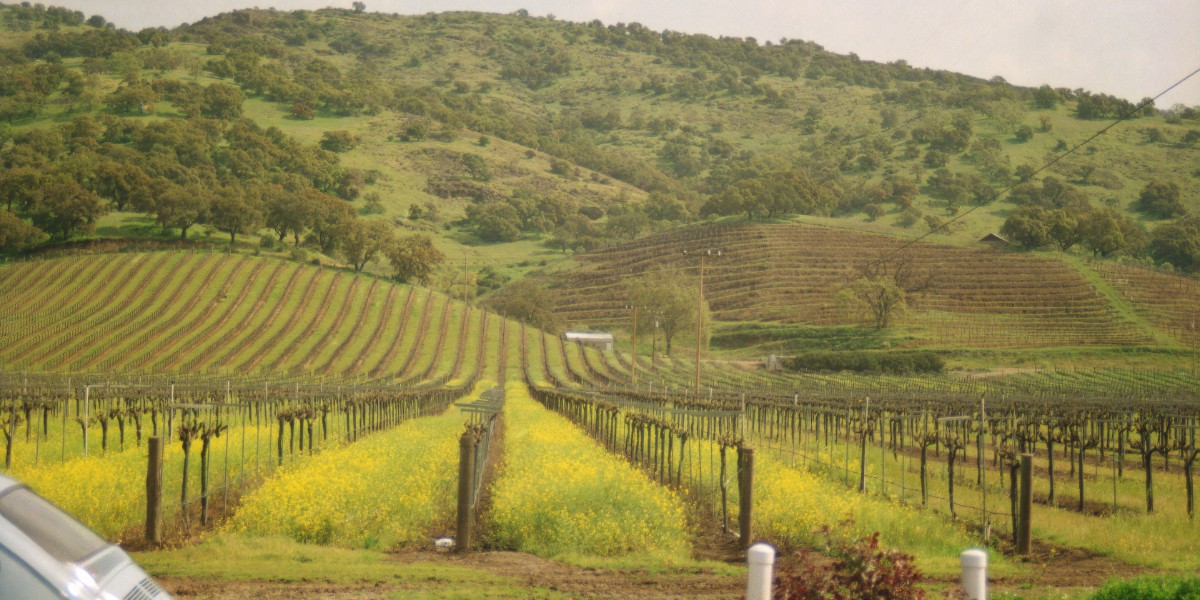
Wine is the headline. The first commercial winegrapes went in the ground in 1967, and the area now has nearly 50 wineries and more than 3,500 acres (14 km2) of producing vineyards. The wine country lies east of the city limits. It was designated the Temecula American Viticultural Area in 1984 and renamed the Temecula Valley AVA in 2004. The Temecula Valley Balloon & Wine Festival is held each May at Lake Skinner, with hot air balloons, live music and tasting.
Old Town Temecula is the downtown district, a run of historic buildings, hotels, museums, event centers and antique dealers. City Hall sits at its center. On Saturdays an outdoor farmers' market brings roughly 70 to 80 local vendors. Events there include the Rod Run car show, the Fourth of July Parade and the Outdoor Quilt Show. The Temecula Valley Museum covers the local Native American band, natural history and the city's development. The Old Town Temecula Community Theater seats 354, with a 48-seat blackbox venue next door.
The Little Temecula History Center, in the old Vail Ranch Headquarters at 31870 Redhawk Pkwy, preserves the ranch complex and keeps a small museum that is open Sundays. Vail Ranch Park has a free zipline and a wild west theme. The Temecula Duck Pond has a Japanese Garden honoring the city's sister city, Daisen in Japan, along with a 9/11 memorial and a sculpture called Singing in the Rain.
What kinds of businesses and employers are in Temecula?
Tourism leads. High incomes and a steady stream of visitors support the wine country, Old Town, the Temecula Valley Polo Club, golf and resorts. Education, professional services, finance and retail are the other key sectors. The Promenade is the conventional shopping mall, redesigned to reach an upscale market.
The largest employer in the Temecula Valley is Pechanga Resort Casino. The Pechanga Band of Luiseño Indians opened it in 2002 at a cost of $262 million, outside the city limits, and it employs 5,000 people. It also hosts boxing and mixed martial arts cards, and festivals such as Wine Festival & Chocolate Decadence, Sushi & Sake and Taco & Tequila. The 2023 Census estimate put median household income at $117,840.
Golf is a business of its own. Courses named in the file include Journey Golf Course, Redhawk Golf Course, Temecula Creek Inn and The Legends Golf Club at Temeku Hills. Professional Golfers Career College trains people who want to work in the golf industry.
How do people get around Temecula?
Interstate 15 and State Route 79 are the two major highways. I-15 has three full interchanges in town, and a fourth at French Valley Parkway is only partly built. State Route 79 comes in past Vail Lake as Temecula Parkway, a six-lane city-maintained road, then overlaps the freeway before leaving it as Winchester Road and heading toward Hemet, San Jacinto and Beaumont.
Main east-west streets include Murrieta Hot Springs Road, Nicholas Road, Rancho California Road, Pauba Road and Temecula Parkway. North-south, they include Jefferson Avenue, Ynez Road, Margarita Road, Meadows Parkway and Butterfield Stage Road.
The Riverside Transit Agency runs buses on routes 23, 24, 55, 61, 79, 202, 205, 206, 208 and 217, with connections to Greyhound. Visitors are told the buses are unreliable and that a car is a necessity. A 2005 study looked at extending Metrolink's 91/Perris Valley Line to Temecula, but that never happened. French Valley Airport is local, and San Diego International and Ontario International are both within 60 miles (97 km).
What are the schools and services in Temecula?
Public schools belong to the Temecula Valley Unified School District, which covers about 148 square miles (383 km2) and has an enrollment of over 28,000 students. Great Oak, Chaparral and Temecula Valley high schools have all won silver medals in the U.S. News Best High Schools rankings. Private options include Linfield Christian School and Rancho Christian School, and there are several charter schools.
Mt. San Jacinto College bought two five-story buildings from Abbott Laboratories in 2018, and the first phase of its nearly 350,000-square-foot (33,000 m2) campus opened in August 2021. Cal State San Marcos has a satellite campus, and National University, the University of Redlands and Concordia University have centers here too.
Temecula Valley Hospital is a five-story, 140-bed hospital that opened in October 2013. The city has five fire stations, contracts with the Riverside County Sheriff's Department for police, and has two public libraries, Grace Mellman Community Library and Ronald H. Roberts Temecula Public Library. The city has 41 parks and 22 miles (35 km) of trails.
Find a local business in Temecula
Temecula is covered by the Temecula Valley guide. Start with the businesses in Temecula itself, or look across the whole guide by what they do.
Businesses in TemeculaQuestions about Temecula
- What county is Temecula in?
- Temecula is in southwestern Riverside County, California, near the border with San Diego County.
- When did Temecula become a city?
- Temecula incorporated on December 1, 1989, with Ron Parks as its first mayor.
- How far is Temecula from San Diego and Los Angeles?
- It is about 58 miles (93 km) north of downtown San Diego and 85 miles (137 km) southeast of downtown Los Angeles.
- How many wineries are in Temecula Valley?
- The wine country has nearly 50 wineries and more than 3,500 acres (14 km2) of producing vineyards. It lies east of the city limits.
- What is the biggest employer in Temecula Valley?
- Pechanga Resort Casino, which opened in 2002 and employs 5,000 people.