Local guidesNorth AtlantaMilton
Milton
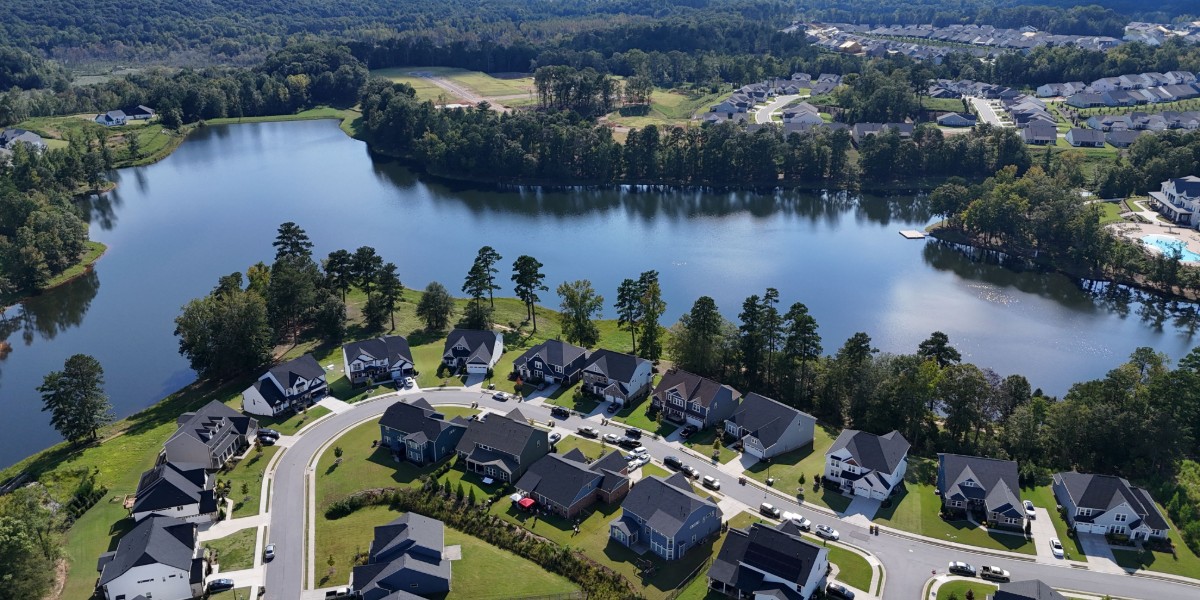
Milton is a city at the northern tip of Fulton County, Georgia, about 30 miles north of downtown Atlanta, known for horse farms, big lots and high incomes.
Where is Milton, and what is it like?
Milton is in Fulton County about 30 miles north of downtown Atlanta. It was incorporated on December 1, 2006, and had 41,296 residents at the 2020 census. The city has over 39 square miles of land, much of it zoned for agriculture, and it is known for its rural and equestrian character, spacious lots and a small-town feel with big-city amenities nearby.
It occupies the northern tip of the county. Roswell and Alpharetta are to the south, Forsyth County and Alpharetta to the east, and Cherokee County to the north and west. The elevation ranges from 950 to 1,280 feet above sea level, and the city has a total area of 39.2 square miles.
The city's comprehensive plan divides it into eight character areas: Arnold Mill, Bethany, Birmingham, Central Milton, Crabapple, Deerfield, Milton Lakes and Sweetapple. Mail is handled through ZIP code 30004, served from the Alpharetta post office, and the Postal Service has recognized Milton as a valid alias since April 2007.
How did Milton begin?
The land was once the domain of the Cherokee Nation, whose presence in Georgia goes back over 10,000 years. The Cherokee spoke an Iroquoian language and lived in villages with ceremonial mounds, growing corn. Settlers from coastal Georgia and the Carolinas traded with them and sometimes intermarried. Demands for land grew, gold was found in nearby Dahlonega in 1828, and the Trail of Tears forced the Cherokee out of Georgia in 1832.
The state then ran a land lottery, with the final one in 1832 covering the land that would become Milton. Settlers cleared dense forest for farms and pastures. Small subsistence farms and a few larger plantations dotted the landscape, with cotton as the main cash crop next to fruit, vegetables and livestock. Milton County was established in 1857 and named for John Milton, a Revolutionary War hero and politician. The county first opposed secession, but state feeling carried Georgia into the Civil War.
At the turn of the 20th century the area was still mostly forest and farmland, with small villages and crossroads with general stores, mills, gins, churches, a few schools and inns. Highway 9 arrived in the 1920s and began linking Milton to the wider world. Then the Great Depression, the boll weevil and a long drought broke the county's finances, and Milton County was dissolved in 1932 and absorbed into Fulton County.
How did Milton become a city?
Life stayed rural for decades. People kept the same jobs and schedules, homes were few and far apart, segregation continued, and the community turned on churches, schools and places like general stores and baseball diamonds. Atlanta's population tripled between 1910 and 1960 and roads spread outward. State Route 400 and other projects brought more people. Milton kept its pastoral identity partly because zoning favored larger lots on septic systems, which suit horse farms.
After the turn of the 21st century a push for local government grew from a belief that distant county officials were not prioritizing the far north of Fulton County. State Representative Jan Jones introduced the bill in January 2005 and held it until January 2006, giving residents a full year to think it over. On March 9, 2006, HB 1470 passed the Georgia House 127 to 21 and the Senate 49 to 0. Governor Sonny Perdue signed it on March 28, and voters approved the city in a July 18 referendum with 85 percent in favor.
On August 4 the governor named a five-person interim commission. Joe Lockwood won the first mayoral election on November 7, 2006, and the city was officially incorporated on December 1, 2006. The police service started on May 1, 2007 and the fire department 16 days later. A new city hall opened in 2017 and the Public Safety Complex in 2020. Lockwood served as mayor for 15 years and was succeeded by Peyton Jamison. The population grew from 32,661 in 2010 to 41,296 in 2020, a rise of more than 26%.
How wealthy is Milton?
Milton regularly ranks among the wealthiest cities in Georgia. Among Georgia cities with 10,000 to 50,000 people it ranked first in median household income. The 2024 American Community Survey five-year estimates put the median household income at $171,295, more than double the figures for Georgia ($77,353) and the United States ($80,734). Family median income was $218,476, and per capita income was $88,928. About 4.3% of residents live below the poverty line.
Education is high too. 77.9% of residents age 25 or older hold a bachelor's degree or higher, against 35.0% in Georgia. Also, 23.3% of residents are foreign-born, compared with 11.2% in Georgia.
The 2024 survey counted 15,594 housing units, and 72.5% of residents own their home. The 2020 census median age was 40.1, and 44.8% of households had children under 18.
What was Milton County?
Milton County was its own county from 1857 to 1931. It was created on December 18, 1857, out of pieces of northeastern Cobb, southeastern Cherokee and southwestern Forsyth counties, and it was named for John Milton, who was Georgia's Secretary of State from 1777 to 1799. Alpharetta was the county seat. The county covered 147 square miles, or 94,080 acres.
The 1900 census counted 6,763 people, which was 555 more than a decade earlier. Alpharetta had 310 residents, and 1,529 lived in and around it. The county had a string of small post offices besides Alpharetta, among them Arnold, Coker, Dinsmore, Field's Cross Roads, Freemansville, McClure, Mazeppa, Ocee, Skelton, Stono and Warsaw. Methodists and Baptists were the dominant churches.
At the end of 1931 the county merged into Fulton County to save it from bankruptcy during the Great Depression. Campbell County, which had already gone bankrupt, was folded in as well, which gave Fulton its long, irregular shape along the Chattahoochee River. Roswell was ceded from Cobb County to Fulton four months later, on May 9, 1932.
The name did not disappear. Some residents of north Fulton have talked about re-creating Milton County. Georgia's constitution now caps the state at 159 counties, so a change would need an amendment supported by two thirds of each house of the legislature and a majority of voters statewide. As of October 2021 no proposals had moved forward. The city of Milton, founded in 2006, took its name from the old county.
What is Crabapple?
Crabapple is one of the oldest parts of Fulton County, and today it is split between Milton, Roswell and Alpharetta. Its center is the crossroads of Georgia highways 140 and 372, sometimes called the Silos area. The land started out in Cherokee County, which was created in 1832, and in 1857 it went toward the new Milton County.
The first permanent settlement came in 1874, and the community took its name from a crabapple tree near the original town site. The historic heart is anchored by an old brick building at the crossroads where Crabapple Road and Mayfield Road meet Birmingham Road, Broadwell Road and Mid-Broadwell Road. A part of Crabapple became part of the new city of Milton in 2006.
Twice a year, in May and October, the community holds the Old Times at Crabapple Antique Festival. Two baseball players came from here. Nap Rucker pitched for the Brooklyn Dodgers and later served as mayor of Roswell, and Johnny Rucker, nicknamed the Crabapple Comet, played for the New York Giants.
Which roads cross Milton?
State Route 372 is the road that gives Milton one of its best-known place names. It starts at State Route 140, known locally as Arnold Mill Road, in the Crabapple area. It heads east at first, then turns north and changes from Crabapple Road to Birmingham Highway, a name that comes from the small community it passes through on the way out of Alpharetta. The road then cuts through the western part of Milton before entering Cherokee County. It runs 27.128 miles in all and ends in Pickens County.
The route appears on state maps as early as 1953, when the Fulton County stretch was a county road linking Birmingham with New Bullpen Road and Union Hill Road. The whole route was mapped by 1969, and the state gave it the number 372 a few years after that. State Route 140 is far longer, at 78.6 miles, and it crosses SR 372 at Crabapple Road in Fulton County before moving into Roswell.
How did Milton's high schools come about?
Milton High School opened in 1921 in Alpharetta and taught grades one to eleven for the whole of Milton County. An elementary school was built in the 1950s, and the high school then took grades eight through twelve. In the 1980s it became Fulton County's first comprehensive high school, and the state named it a School of Excellence for the 1997-98 school year. A new campus built on the academy model opened in Milton in 2005, with freshmen only in the first year.
Cambridge High School opened in August 2012 as the 17th high school in the district, built to relieve crowding at Alpharetta High School and Milton High School. Its name is a puzzle with three parts. The C is for the Cogburn family, who owned the land before, the A and the M are for the Alpharetta and Milton students who moved over, and the bridge is for a bridge on the school's property.
Both schools belong to Fulton County Schools, which is headquartered in Sandy Springs and is the fourth-largest school system in Georgia. It serves the north Fulton cities of Alpharetta, Johns Creek, Milton, Mountain Park, Roswell and Sandy Springs. It is also the only school district in the state split in two, with a 17-mile gap held by Atlanta Public Schools between its northern and southern parts.
How do people get around Milton, and what about schools?
Two main north-south roads cross the city. State Route 9 runs through the southeast, and State Route 372, also called Birmingham Highway, runs through the middle. State Route 140, known as Arnold Mill Road, is in the southwest.
Fulton County Schools run the public schools. Elementary schools are Birmingham Falls, Cogburn Woods, Crabapple Crossing and Summit Hill. Middle schools are Hopewell and Northwestern, and the high schools are Cambridge and Milton. Private schools include Chandler Academy, King's Ridge Christian School, Mill Springs Academy and St. Francis Schools. The city is represented in the state Senate by Jason Dickerson and in the state House by Jan Jones and Chuck Martin.
Find a local business in Milton
Milton is covered by the North Atlanta guide. Start with the businesses in Milton itself, or look across the whole guide by what they do.
Businesses in MiltonQuestions about Milton
- How far is Milton, Georgia from Atlanta?
- Milton is about 30 miles north of downtown Atlanta.
- When was Milton incorporated?
- The city was officially incorporated on December 1, 2006, after voters approved it in a July 18 referendum.
- How many people live in Milton?
- The 2020 census counted 41,296 residents, up from 32,661 in 2010.
- Where does the name Milton come from?
- It is named for John Milton, a Revolutionary War hero who also gave his name to the former Milton County.
- What is the median household income in Milton?
- The 2024 American Community Survey five-year estimates put it at $171,295.
- Was there ever a Milton County in Georgia?
- Yes. Milton County existed from December 18, 1857 until the end of 1931, when it merged into Fulton County during the Great Depression. Alpharetta was its county seat.
- Where is Crabapple, Georgia?
- Crabapple centers on the crossroads of Georgia highways 140 and 372 and is split between Milton, Roswell and Alpharetta.
- When did Cambridge High School open?
- Cambridge High School in Milton opened in August 2012 to relieve crowding at Alpharetta High School and Milton High School.